
By joining OJC, libraries support the long-term sustainability of university-based and independent non-profit journals.

How It Works: The OJC Model.
Launched in January 2026, OJC is designed to raise collective investment for a transition to academic-led, non-profit diamond open access. Published by world leaders in non-profit and university-based digital publishing, the initiative offers libraries and funders the opportunity to support equitable research infrastructure for journals.
We offer three collections of diamond open access journals.
How It Works: For Libraries.
OJC allows libraries to support diamond open access journals at scale through our library membership programme. Funding from our library members is distributed directly to the journals in our collection, helping to give them a sustainable, long-term future.
Any journal included in the OJC Collections that already receives funding from their publisher, scholarly society, or an institutional partner will only be eligible for reduced "top-up" funding (see Package C in the table below). This would include, for example, journals already receiving support via library membership models that cover some of their publishing costs.
This is to ensure that libraries are not being asked to pay twice for the same thing - but it also acknowledges that current library membership models do not raise sufficient funds for diamond OA journals to be sustainable long term as these schemes cannot afford to pay for things such as copyediting or editorial management support.
Become a Library Member
Become a Library Member.
How to join.
Libraries can either order and pay for membership directly with OJC, or they can join via the following consortia:
Center for Research Libraries (CRL) - https://www.crl.edu/open-journals-collective-ojc-partnership
Jisc - https://subscriptionsmanager.jisc.ac.uk/catalogue/3304
To join OJC directly, please email info@openjournalscollective.org.
We are in active discussions with a range of consortia in other countries to provide further opportunities for libraries to join OJC via national or regional consortia.
Pricing.
Our standard pricing for libraries joining directly with OJC is available in our brochure on pages 11-12. Libraries joining via a consortium receive a 10% discount on these prices.
Pricing is determined by the total number of full time equivalent students at your institution and is split into three categories: small, medium and large.
Libraries can join for one year at a time, or they can sign up for two or three year agreements (invoiced year on year). We also have higher tier bronze, silver, gold and platinum levels for libraries to fund us at higher rates if they are able to do so. The member benefits are the same as standard tier membership.
We are committed to ensuring that OJC membership is as accessible as possible for libraries in all countries. If you are from a library outside of North America, Europe or Australasia, please contact us to discuss adapting pricing to your local country.
Member Benefits.
The benefits for libraries of OJC membership.
By joining OJC, libraries become part of a vibrant community, based around our collaborative governance structures, and in sharp contrast to the transactional customer experience offered by commercial vendors. All member libraries have a seat on our Library Board, giving them the opportunity to help lead OJC alongside us and having a powerful voice over the organisation’s strategic direction. And there are many opportunities to help run and build OJC via our Working Groups.
We work with each of our member libraries to highlight and celebrate their membership, including a press release about their membership and member listing on our website.
Libraries will also benefit from OJC’s development of community-owned, open source technology, particularly the Impact Dashboard being built in 2026-27. This joint project with the Open Book Collective will create an Impact Dashboard for both organisations, displaying data about the impact of OJC’s journals from a range of open data sources and allowing libraries to explore OJC publications related to their institution and to the country in which they are based. We expect to deliver the first phase of the Impact Dashboard within the 2026 calendar year.
Have questions or want to talk to us?
Please email info@openjournalscollective.org if you have any questions or would like to find out more about OJC. We would be delighted to arrange a video call.
Become a Supporter.
Not able to be a library member? Become a Supporter!
If your library is not in a position to join OJC, you can still invest in us and support our diamond open access journals by becoming a Supporter. To become a Supporter, libraries can make a one-off investment in OJC, with no recurring commitment, at any amount of your choice over £1,000. Any library can make a Supporter investment at any time, including those who are already library members.
To become a Supporter, please email info@openjournalscollective.org.
Become a Supporter
How It Works: Journal Flipping & Growing the Collections.
We have designed a scalable pathway to migrate journals away from commercial publishers and subscription models. Titles can "flip" to diamond open access with the OJC, empowering libraries to cancel commercial journal subscriptions or walk away from Transformative Agreements. Working together, libraries, academics, scholarly associations, and university-affiliated publishers can build a fairer and more affordable journals publishing system.
Join the movement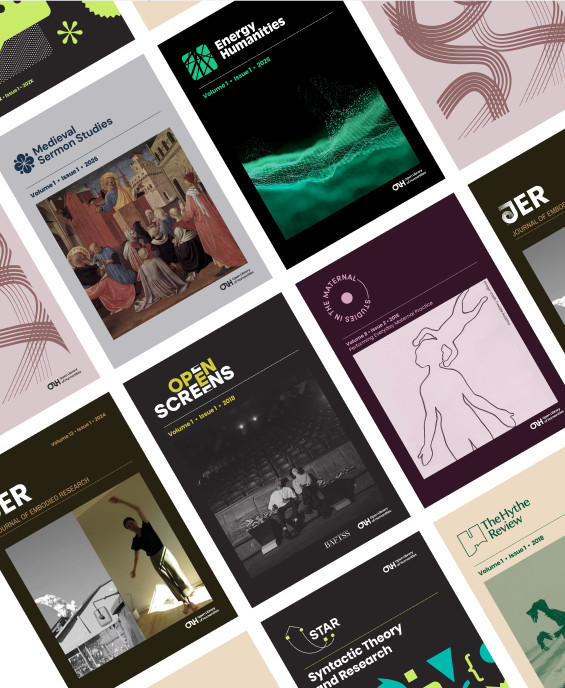
How It Works: Journal Funding & Revenue Distribution.
OJC funding packages are indicative of the revenue distribution of funds raised by the OJC across all journals within its collections. These funds are paid to journals on an annual recurring basis. The amount of funding that each journal is eligible to receive will be determined by a Funding Committee composed solely of Library Members. This Committee will draw on a revenue distribution model that calculates annual journal payments using criteria such as number of articles published per year, and relevant production costs (like typesetting, proofreading, or translation). All journals receive the same standard base payment to cover costs such as journal hosting, indexing, and digital preservation, irrespective of the size of the journal.
Funding allocation will also take into account whether journals receive support from pre-existing income streams, such as library membership models or institutional funds. Revenue allocation will range from £5,000 - £25,000 per journal, depending on the journal’s size, operating expenses, and any additional sources of funding available to them.
| Package & Band | Journal Size | No. of articles p/year | Annual Funding |
|---|
|
Package A (full support) Full support for journals with no funding or income. |
|||
|---|---|---|---|
| 1 | Tiny | 10 | £7,500 |
| 2 | Small | 25 | £10,500 |
| 3 | Medium | 50 | £19,200 |
| 4 | Large | 100 | £26,000 |
| 5 | Very Large | 500 | £46,000 |
|
Package B (partial support) Partial support for journals with minimal funding or income. |
|||
|---|---|---|---|
| 1 | Tiny | 10 | £6,000 |
| 2 | Small | 25 | £9,000 |
| 3 | Medium | 50 | £17,700 |
| 4 | Large | 100 | £24,000 |
| 5 | Very Large | 500 | £43,000 |
|
Package C (top-up support) Top-up support for journals with established funding or income. |
|||
|---|---|---|---|
| 1 | Tiny | 10 | £5,000 |
| 2 | Small | 25 | £7,000 |
| 3 | Medium | 50 | £9,350 |
| 4 | Large | 100 | £12,500 |
| 5 | Very Large | 500 | £24,500 |
We will provide documentation, training events, and regular community meet-ups for OJC members.